
Problem: The goal was to provide a full treatment journey in 1 appointment, including connection to local community services, and a focus on de-medicalising the patient experience.
Solution: A distillation of the patient journey into 4 distinct sections, positioned within community spaces, and supported by a wide array of information & communication pieces to ensure comprehension & patients comfort & safety.
Outcome: National & international attention, praise from government & NHS leaders, & calls from the Chartered Society of Physiotherapists to introduce this approach nationwide as a new standard model of care.
The Brief
In early 2023 I was part of a small team tasked with realising a highly innovative healthcare vision: A de-medicalised, community focused, physiotherapy event held outside of traditional healthcare venues that would allow patients to recieve their entire course of treatment (typically lasting months) in just one appointment. It was also intended to connect the service and patients with local community support networks, as well as help to reduce the long waits for appointments.
The Approach
Within the team I was directly responsible for 2 critical paths: Information Design (naming, patient communications, branding, & ‘patient passport’) and Patient Flow (expected journey mapping, venue layout & wayfinding, & on-the-day processes) alongside a supporting role in all other aspects of the planning & realisation.
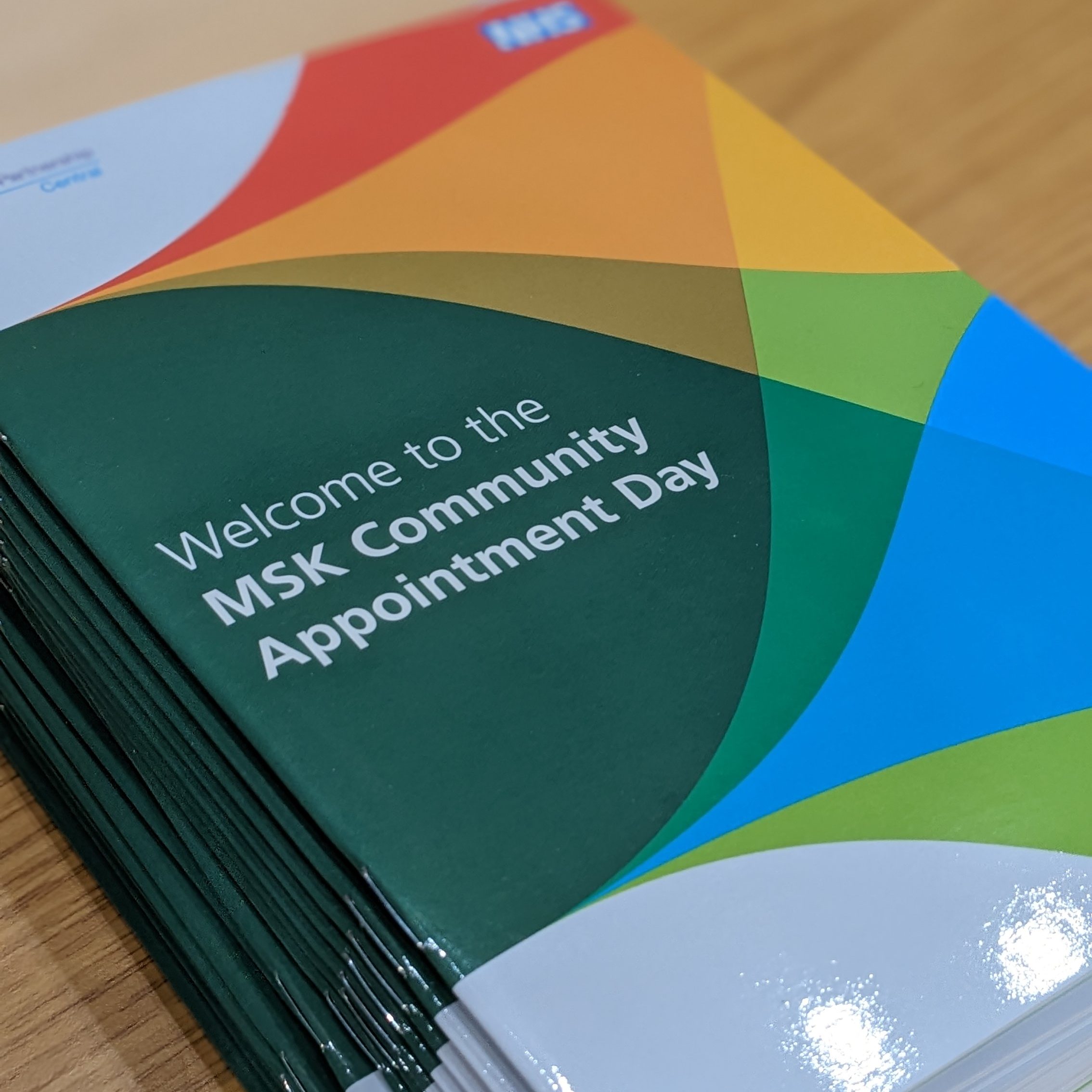
In just 12 weeks our team conceptualised, developed, and hosted the first Community Appointment Day. The events received spectacular feedback from patients and staff, national & international attention, nationwide news coverage, and acclaim from NHS leaders & members of government. The model has since been replicated by numerous Physiotherapy services across the country and there are discussions in place for how this model can be adapted to serve other clinical specialisms across the NHS.
Information Design
Naming & Patient Communications
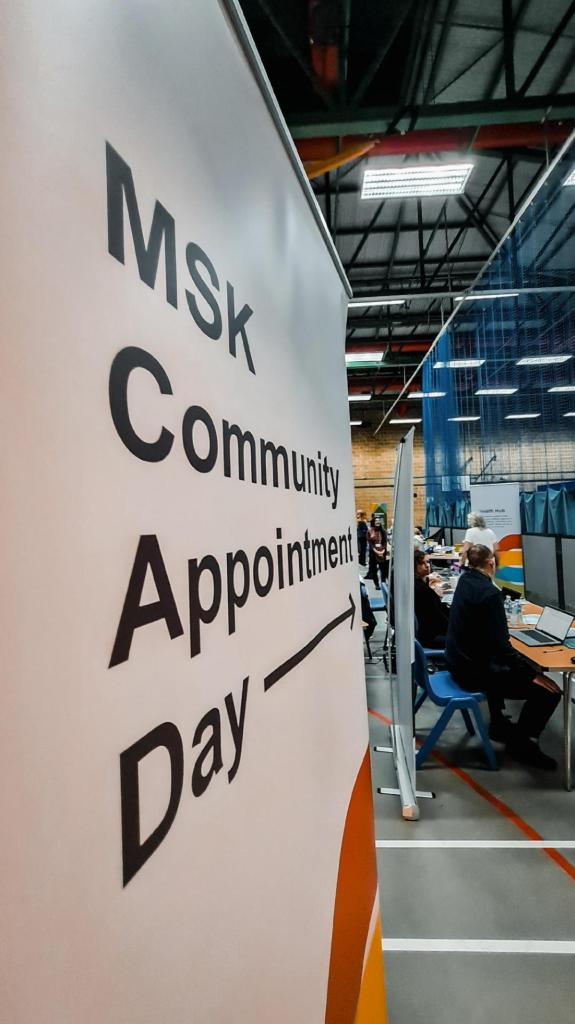
The first challenge was creating a name and writing appointment information that made clear to patients what to expect from the event. For the name, myself & the marketing lead established that it needed to ensure percieved value from patients, reference the local de-medicalised focus, and make clear that this was an event not a change to normal service provision, all whilst remaining simple and memorable. The ‘Community Appointment Day’ was the solution.
Myself & the operations leads planned an SMS based self-booking system to ensure booking the 250-300 patients wouldn’t overload adminstration capacity. To enable this the SMS was carefully crafted to direct patients to an explanatory webpage (www.sussexmskpartnershipcentral.co.uk/msk-cadh/) in which I pre-emptively answered likely FAQs (this was also converted to a printed letter for those without digital access). This was a resounding success with a 95-98% webpage access rate across the 2 pilot events.
Branding
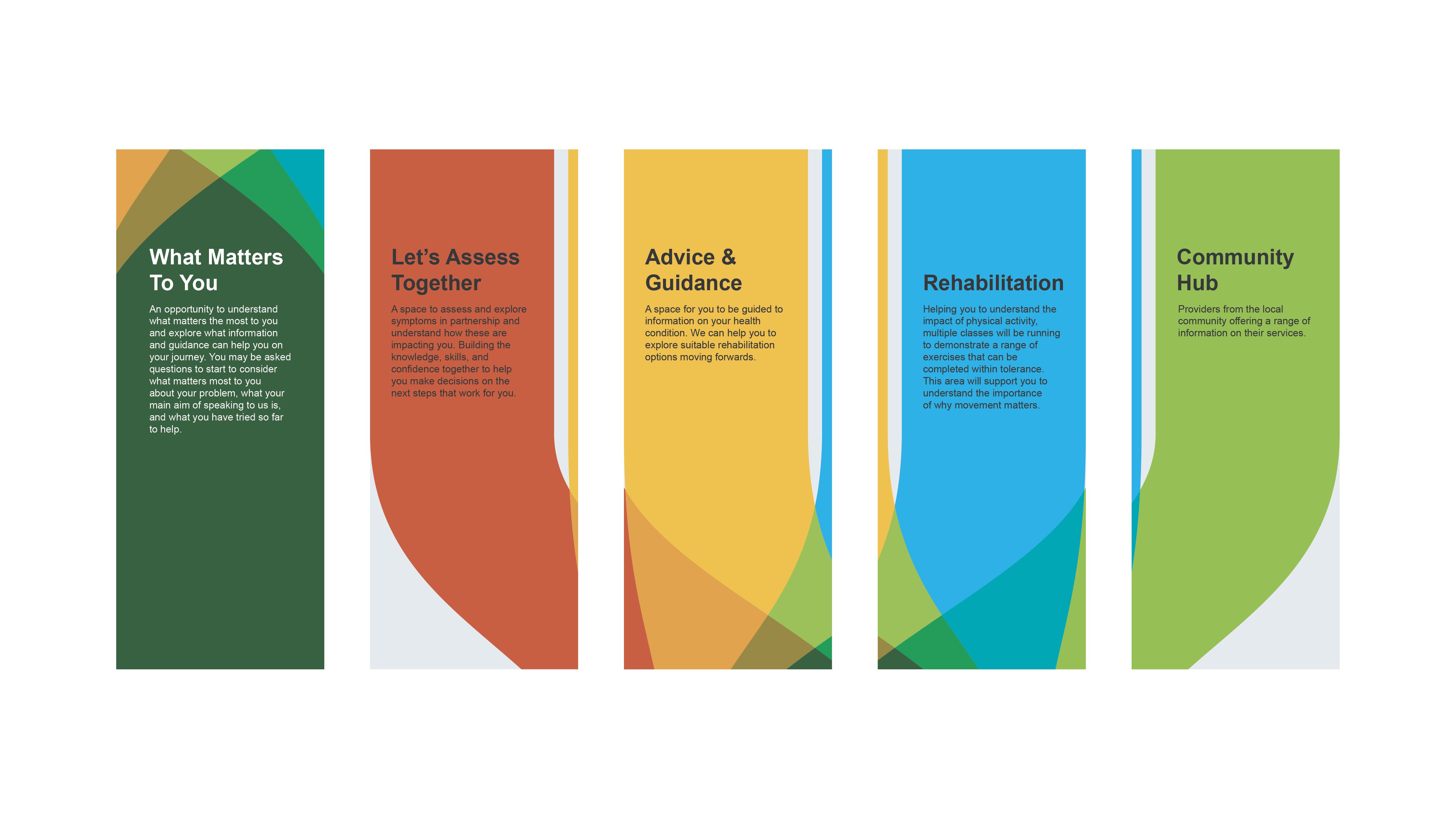
A visual identity needed to be produced to ensure marketability and recognisability. I represented the branching patient journeys into a bold, minimal icon featuring overlayed coloured ‘limbs’ with each colour aligned to the different sections (the colour set was developed to be distinct for all types of colour blindness). This logo icon became the foundation for all further graphic products, helping to keep the imagery tightly aligned visually and time efficient to produce.

‘Patient Passport’
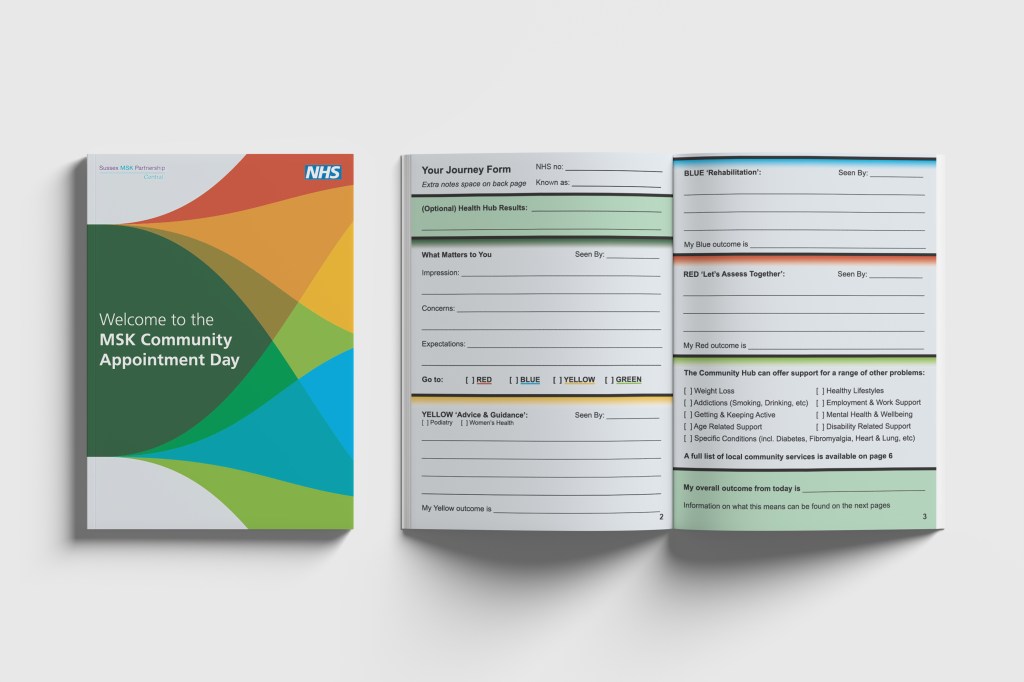
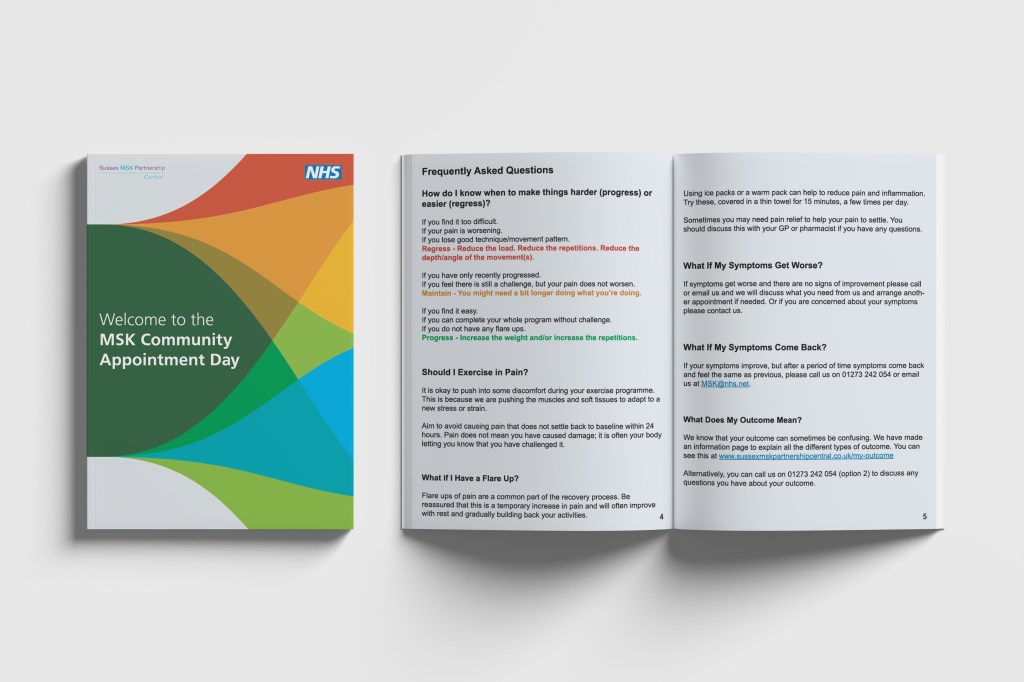
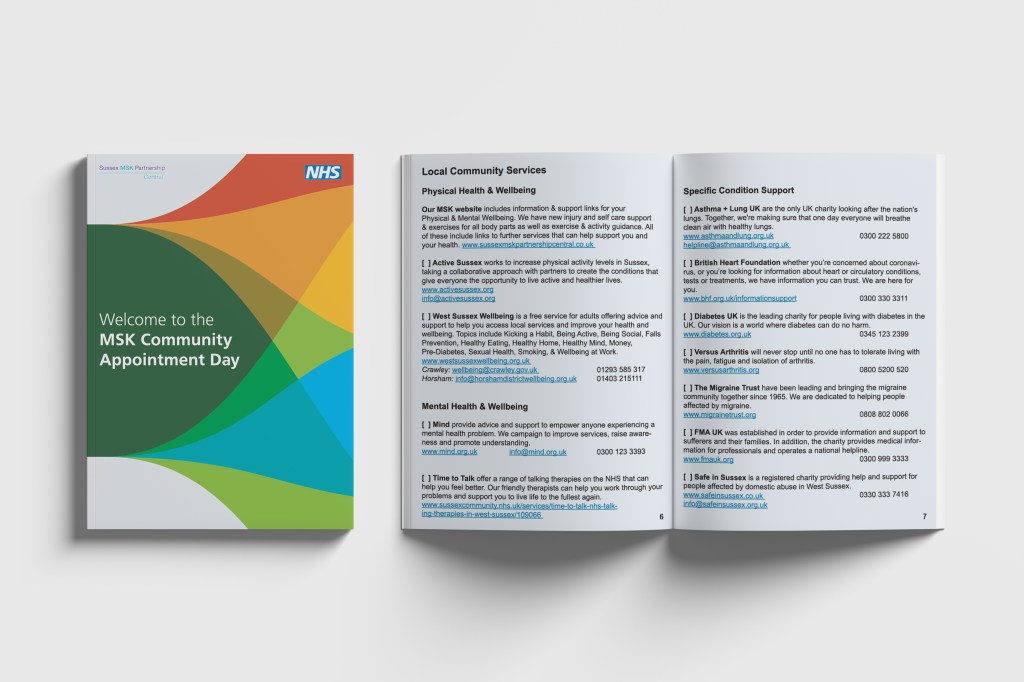
De-medicalisation (and focusing on patient defined needs) meant letting go of two tenets of traditional healthcare: the referral and the treatment letter. However, it was clear we would still need a way to capture each patients overall treatment journey (for our records) and ensure that each section had adequate information from the previous without needing the patient to repeat their story. This function was equated to the role of a passport and boarding card in air travel. As such, this document became known as the ‘Patient Passport’.
The passport was designed to have a high perceived aesthetic & functional value to encourage patients to keep it long after their appointment. A central double page spread was used to capture the patients treatment journey & support them in navigating the hall (this would then be scanned and attached to their medical record at ‘check-out’). Other pages within the booklet helped support their understanding of the event, prepare for the patient lead conversations, and provide them with answers to common post-treatment questions.

Patient Flow
Journey Mapping
The first challenge we faced was to define how such a vision could even be made possible, how a patients journey could be made to last only 1 appointment and efficiently treat 250-300 patients in one day.
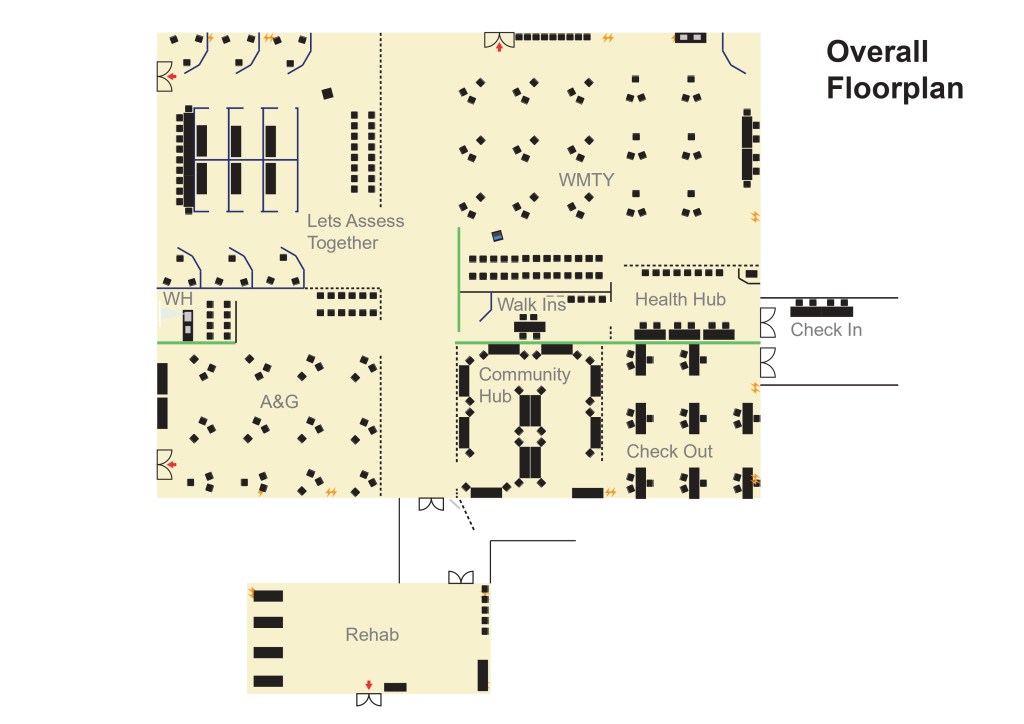
By observing and evaluating typical physiotherapy appointments we were able to categorise them into 4 distinct functions: conversational assessments, physical assessments, advice & guidance, and rehabilitation exercises. By converting these into physical sections this would allow patients to visit different clinical specialities depending on their needs and allow patients to move efficiently through the space. Myself & the operations lead then analysed the services treatment records and referral outcome data and produced a map of expected & potential patient journeys for the event. This flow map was then used to define the physical position, scale, & staffing volume for these sections.
Venue Layouts & Wayfinding
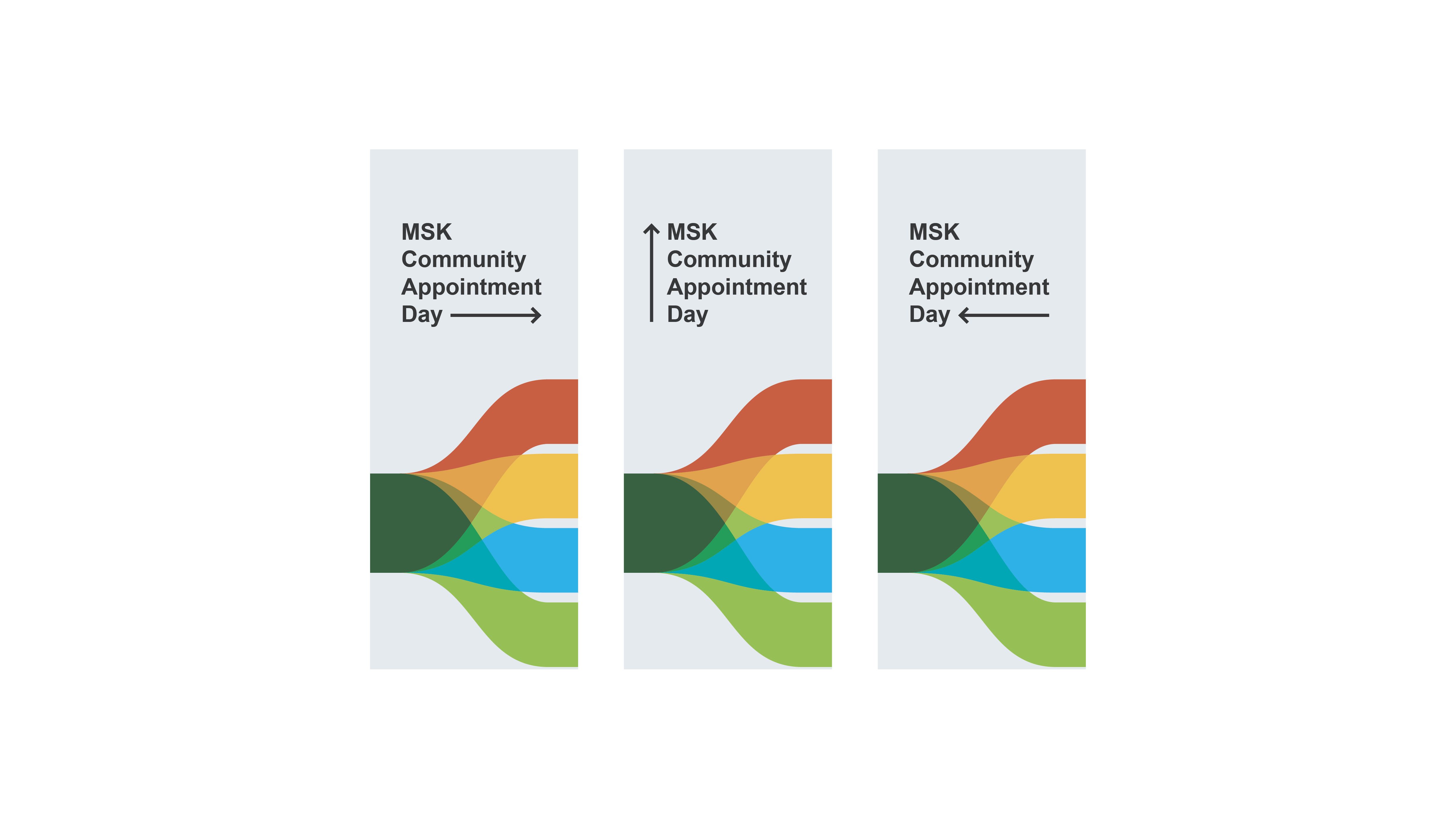
We quickly established that the only suitable locations would be sports halls (as we would need to accomodate 60+ staff and 250-300 patients across 8 hours). The principle challenges of the floorplan were ensuring smooth patient flow, creating a sense of privacy despite the lack of walls, and reducing the risk of overwhelm to patients & clinicians. To ensure smooth flow the patient flow map above was used to order the sections following cascading complexity/demand in order to achieve as close to total one way flow as possible. All of these goals were achieved successfully with only a handful of confused navigating patients, not a single mention of privacy in our feedback, and both clinicians and patients expressing thanks at having “all the time they needed”. The tight NHS budget for the events required considerable ingenuity, reducing equipment (and therefore costs) wherever possible.

 Jimie.